Menopause & Hair Changes:
Managing Hormonal Thinning
What is Menopause-Related Hair Loss?
As women approach perimenopause and menopause, estrogen and progesterone levels decline. These hormones naturally protect hair roots and keep hair in the growing phase.
When they drop, the effects of androgens (male hormones) can become more dominant, causing hair follicles to shrink. This is often coupled with general aging of the hair shaft, leading to hair that feels thinner, drier, and more brittle.
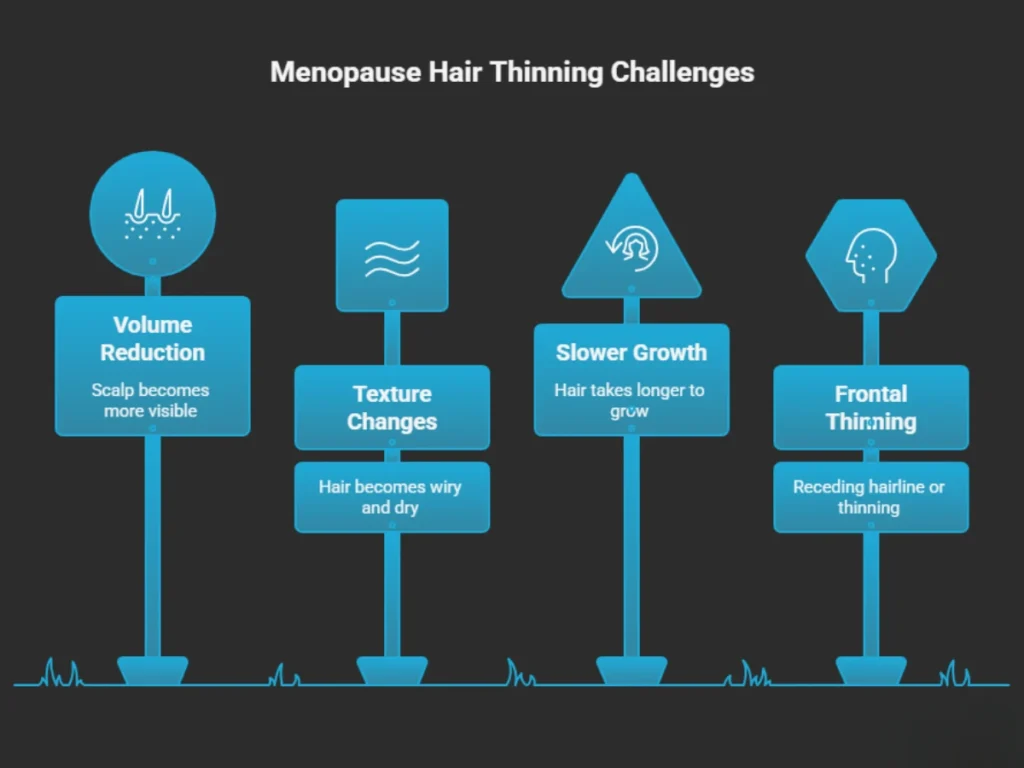
Most Common Signs
Volume Reduction
A gradual loss of overall density; the scalp becomes more visible.
Texture Changes
Hair that was once silky may become “wiry,” dry, or frizzy.
Slower Growth
Hair seems to take much longer to grow in length.
Frontal Thinning
Receding hairline or thinning behind the fringe area.
Who It Affects
This condition affects women primarily in their 40s, 50s, and 60s. However, perimenopausal symptoms can begin years before periods stop. Women taking or stopping HRT (Hormone Replacement Therapy) may also experience fluctuations in their hair quality that require specialist management.
Why Early Assessment Matters
Menopausal hair loss is progressive. Once the hair follicles miniaturize significantly, it is difficult to reverse.
Furthermore, hair loss at this age isn’t always just “hormones”—it can be linked to stress, medication, or metabolic changes. We take a holistic view, advising on topical treatments and nutritional support to maintain the hair’s density and cosmetic appearance as you age.

Easy Access from East & West Sussex
Our clinic understands the unique challenges of menopause. We welcome women from Brighton, Hove, Shoreham, and Lewes seeking a sympathetic, knowledgeable approach to hair ageing.
Maintain Your Hair Confidence
Discuss your symptoms with a specialist who understands menopause.