

If you have spent any time researching Male Pattern Baldness on internet forums, Reddit, or YouTube, you have almost certainly encountered the term “The Big 3.”
For many men in the UK dealing with the early signs of genetic thinning, this regimen is often touted as the “gold standard” for halting recession and maintaining density.
However, as a Consultant Trichologist based here in Sussex, I often see patients who have started this regimen blindly. Many do so without understanding how the drugs interact or—crucially—without confirming if they actually have the condition these drugs are designed to treat.
Here is a clinical breakdown of the classic “Big 3,” the modern debate surrounding the third component (Microneedling), and why professional monitoring is vital for your long-term health.
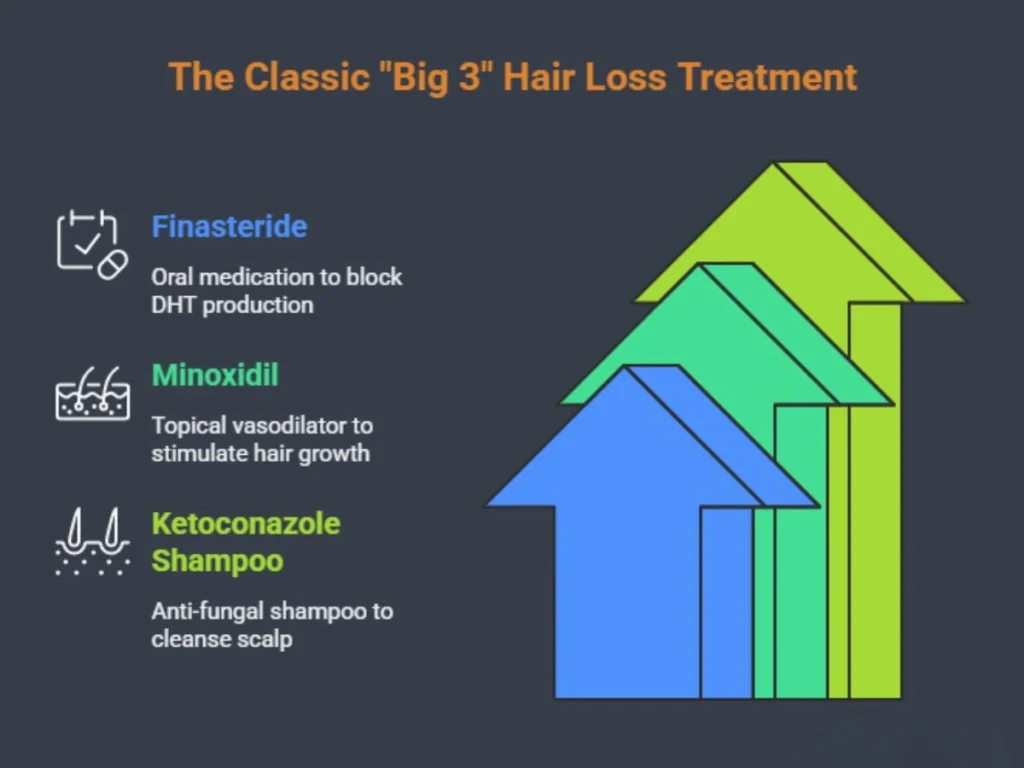
The Classic “Big 3” Components Explained
When people refer to the Big 3, they are referring to a synergistic, three-pronged attack on hair loss. The theory is that by combining these three distinct mechanisms, you tackle the hormonal cause, stimulate blood flow, and optimise the scalp environment simultaneously.
1. Finasteride (The Hormone Blocker)
Finasteride (often sold under brand names like Propecia) is an oral medication. It works by inhibiting the enzyme 5-alpha reductase, which is responsible for converting testosterone into Dihydrotestosterone (DHT).
In men with Androgenetic Alopecia (Male Pattern Baldness), DHT is the hormone that shrinks hair follicles (miniaturization) until they no longer produce visible hair. By lowering systemic DHT levels, Finasteride attempts to stop the loss in its tracks.
- Trichologist’s Note: In the UK, Finasteride is a Prescription Only Medicine (POM). It alters your hormonal profile and carries potential side effects regarding sexual function and mood. It should never be bought online without a proper medical history check and professional oversight.
2. Minoxidil (The Growth Stimulator)
Known commonly in the UK as Regaine, Minoxidil is a topical vasodilator. When applied to the scalp as a foam or liquid, it widens the blood vessels around the follicle, delivering more oxygen and nutrients.
It effectively forces the hair into the Anagen (growth) phase and can thicken existing hairs.
- Trichologist’s Note: Minoxidil is a lifelong commitment. It does not stop the hormonal attack (DHT); it only stimulates growth. If you stop using it, any hair you gained or preserved via the drug will fall out within months.
3. Ketoconazole Shampoo (The Scalp Cleanser)
The third pillar of the classic regimen is Ketoconazole (often branded as Nizoral). This is primarily an anti-fungal medicated shampoo used to treat severe dandruff and Seborrhoeic Dermatitis.
It was included in the “Big 3” because some studies suggest it has mild anti-androgenic properties (helping to disrupt DHT locally on the scalp) and reduces the micro-inflammation that accelerates balding.
The “New” Big 3: Is Microneedling Better than Shampoo?
In recent years, the definition of the Big 3 has shifted. Many hair loss communities and clinical studies now argue that Microneedling (Dermarolling) is a far more effective third component than Ketoconazole shampoo.
How Microneedling Works
Microneedling involves using a device with tiny needles to create controlled micro-injuries on the scalp. This triggers the body’s natural wound-healing response, boosting collagen production and growth factors.
Furthermore, if Minoxidil is applied shortly after microneedling (we typically advise waiting 24 hours to avoid systemic absorption side effects), the channels created by the needles allow for deeper penetration of the stimulant.
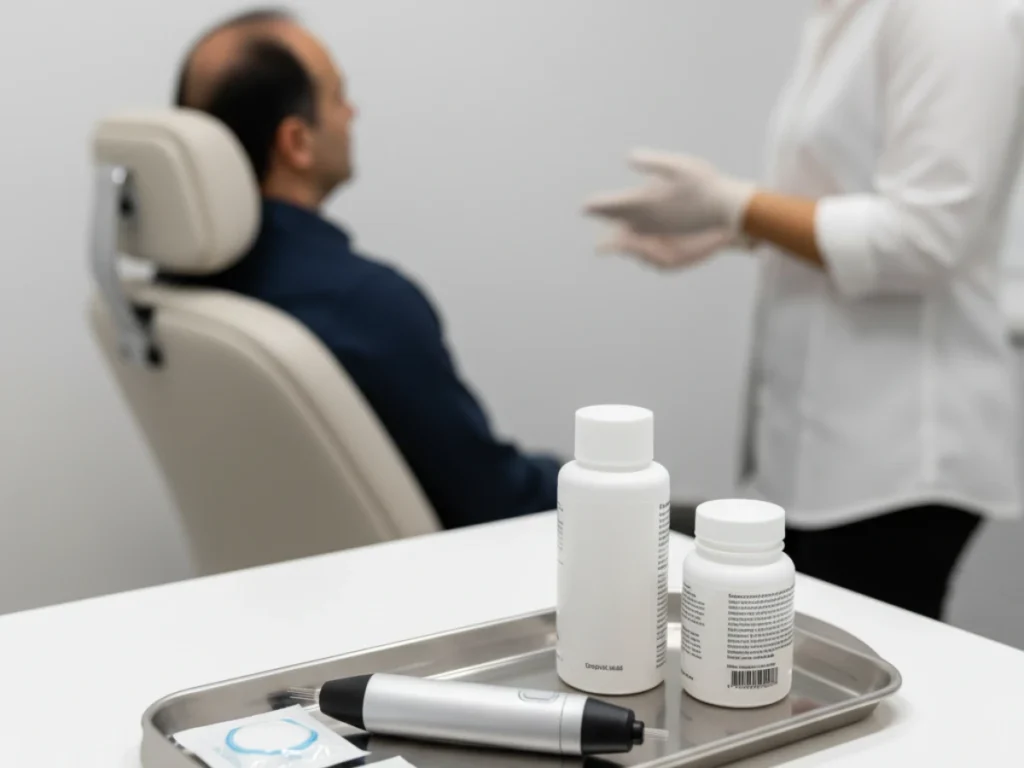
The Dangers of DIY Microneedling
While the results can be promising, performing invasive treatments at home carries a high risk of infection and scarring. Using the wrong needle depth can damage the hair follicle permanently rather than stimulating it. At Sussex Hair Clinic, we strongly advise against aggressive DIY invasive treatments without clinical guidance.
Why You Should Not Self-Medicate
While this combination can be effective for Male Pattern Baldness, treating hair loss is not a “one size fits all” approach.
Is it actually Male Pattern Baldness?
If your hair loss is caused by Telogen Effluvium (stress/diet), Alopecia Areata (autoimmune), or Folliculitis (infection), the “Big 3” will be useless. In fact, Minoxidil can make Telogen Effluvium shedding worse initially. You need a diagnosis first.
Side Effect Monitoring
Self-medicating leaves you vulnerable. Who is monitoring your progress? Who do you call if you experience heart palpitations from Minoxidil or side effects from Finasteride?
Expert Management at Sussex Hair Clinic
At Sussex Hair Clinic, we believe in evidence-based, safe treatment. Before you commit to a lifetime of medication, visit Shuna Hammocks at our Forest Row clinic.
We use digital trichoscopy to confirm the health of your follicles. If the “Big 3” is appropriate for you, Shuna can guide you on how to use it safely, monitor your scalp health, and combine it with clinical therapies like Low-Level Laser Therapy (LLLT) or nutritional support for superior results.
Don’t guess with your health. Get a plan that works.
Book Your Assessment
Located at The Anderida Practice in Forest Row, we are easily accessible for patients across Sussex.