PCOS Hair Loss:
Managing Androgenic Thinning
What is PCOS-Related Hair Loss?
Polycystic Ovary Syndrome (PCOS) is a complex endocrine condition. One of its primary features is an excess of Androgens (male hormones like testosterone).
In the scalp, these androgens can attack the hair follicles, causing them to shrink and produce thinner, shorter hairs. This is essentially an accelerated form of Female Pattern Hair Loss triggered by the hormonal imbalance of the syndrome.

Most Common Signs
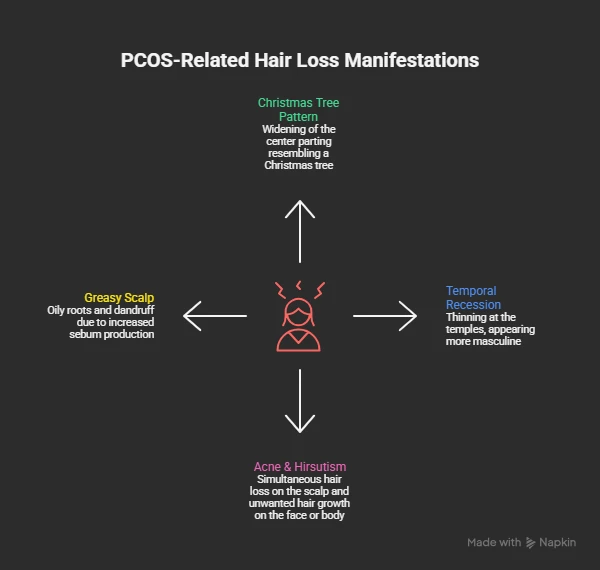
"Christmas Tree" Pattern
A widening of the centre parting that spreads outward, resembling a Christmas tree shape.
Temporal Recession
Thinning at the temples, which can feel more “masculine” in nature.
Acne & Hirsutism
You may simultaneously experience hair loss on the scalp and unwanted hair growth on the face or body.
Greasy Scalp
Excess androgens often increase sebum (oil) production, leading to oily roots and dandruff.
Who It Affects
This affects women of reproductive age. It is often diagnosed in the late teens or 20s, making it particularly distressing for young women. It is a lifelong condition, but the hair loss symptoms can be managed.
Why Early Assessment Matters
PCOS hair loss is internal. Treating it requires a two-pronged approach: managing the internal hormonal environment (often alongside your GP or endocrinologist) and externally stimulating the scalp to protect the follicles from androgen attacks.
Waiting too long can lead to permanent follicular miniaturization. We help you build a routine that maximizes retention and improves density.
Supportive Care in Sussex & Kent
We understand how PCOS impacts self-esteem. Women from Tunbridge Wells, Haywards Heath, Burgess Hill, and Eastbourne trust us to provide sensitive, scientific care for this complex condition.
Manage PCOS Hair Symptoms
You don’t have to accept thinning hair as part of your diagnosis.