
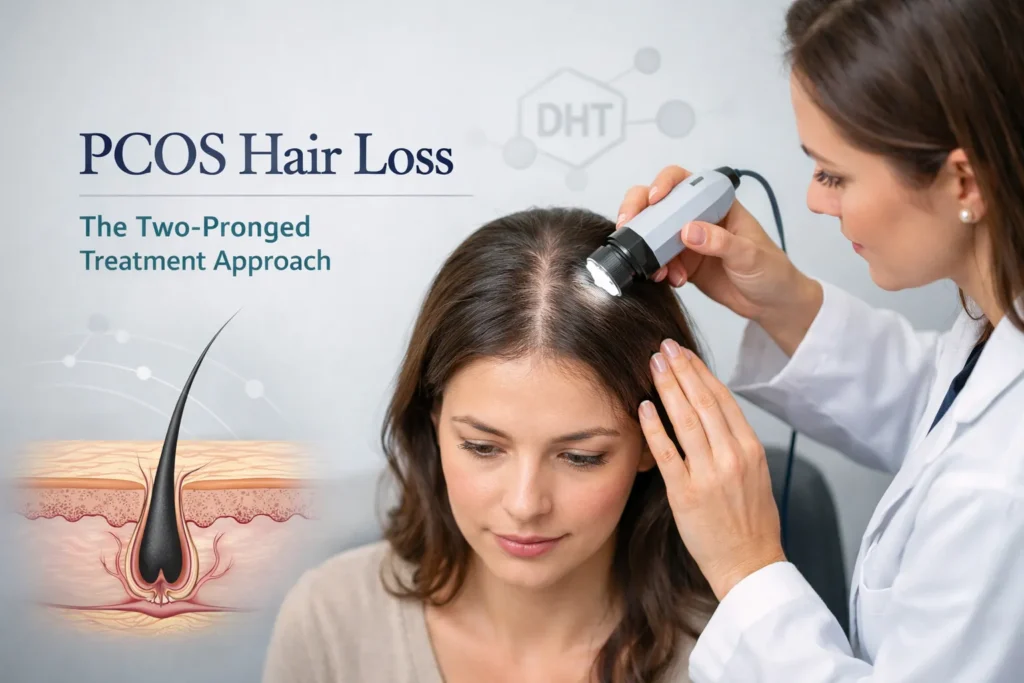
Why External Products Alone Are Not Enough
If you are dealing with PCOS-related hair thinning, it is important to understand one simple fact:
Shampoos and serums alone will not fix it.
Polycystic Ovary Syndrome (PCOS) is a hormonal condition. The problem starts inside the body. That means treatment must also start inside the body.
At Sussex Hair Clinic, we often explain this clearly to patients visiting our PCOS Hair Loss page. The most effective approach uses two steps:
- Manage the internal hormone imbalance
- Support and protect the hair follicles externally
Both are important. One without the other is often not enough.
Why PCOS Causes Hair Thinning
PCOS can increase androgen (male-type hormone) levels. Women naturally produce androgens, but higher levels can affect hair growth.
One hormone plays a key role: DHT (dihydrotestosterone). DHT attaches to hair follicles and slowly shrinks them. This process is called miniaturisation. Over time, you may notice:
- Thinner strands
- Slower growth
- More shedding
- Widening at the crown
- Shorter growth cycles
This pattern is very similar to female pattern hair loss. No shampoo can reduce hormone levels in your bloodstream. That is why internal treatment matters.
Prong One: Managing the Internal Hormonal Imbalance
Because PCOS is an endocrine condition, medical input is essential. A GP or endocrinologist should assess hormone levels and metabolic health. Internal management may include:
1. Hormonal Regulation (Under Medical Supervision)
A doctor may prescribe:
- Combined oral contraceptive pill
- Anti-androgen medication (such as spironolactone)
- Insulin-sensitising medication (such as metformin)
These treatments aim to:
- Lower circulating androgens
- Reduce DHT production
- Stabilise hormonal fluctuations
Medication decisions must always be made with your GP.
2. Blood Sugar and Insulin Control
Many women with PCOS have insulin resistance. High insulin can stimulate the ovaries to produce more androgens. Improving insulin sensitivity may help reduce this effect. Lifestyle support may include:
- Balanced, low-glycaemic meals
- Regular strength training
- Consistent physical activity
- Weight management where appropriate
These changes do not work overnight. However, steady improvements in metabolic health can reduce long-term androgen stimulation.
3. Nutritional Support
Supplements should only be taken when clinically appropriate. Common nutrients sometimes reviewed in PCOS management include:
- Inositol
- Vitamin D
- Omega-3 fatty acids
- Iron (if deficient)
Blood testing is important before supplementing iron or vitamin D. Internal stability creates the foundation for recovery. Without it, results from topical treatments are often limited.
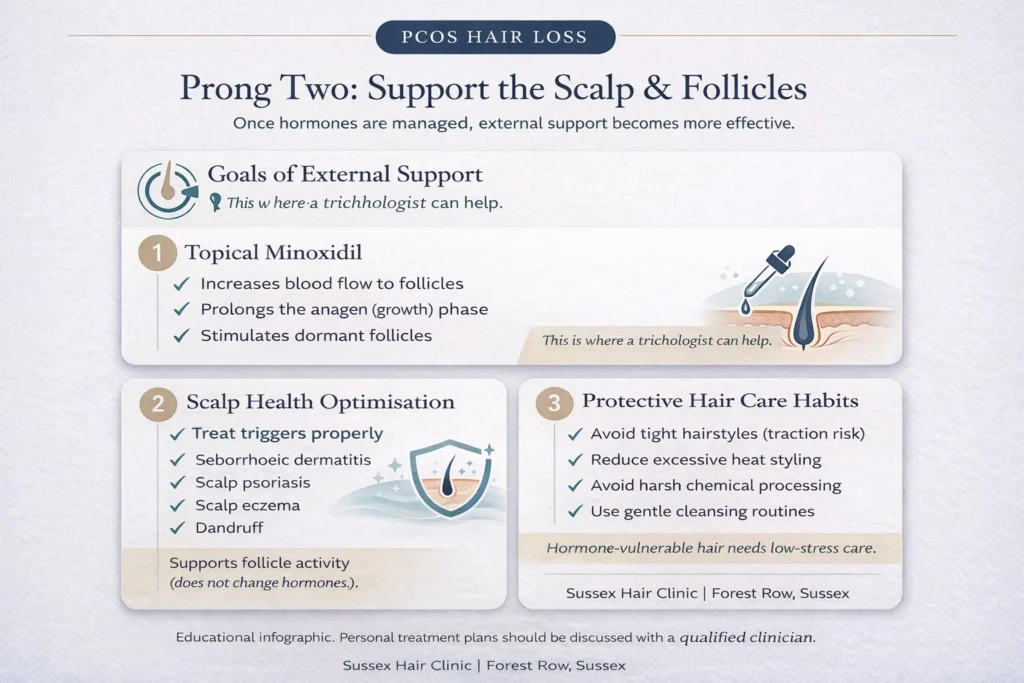
Prong Two: Supporting the Scalp and Hair Follicles
Once hormones are being managed, external support becomes more effective. External treatments aim to:
- Improve blood circulation
- Support follicle function
- Extend the growth phase
- Strengthen existing hair
This is where a trichologist can help.
1. Topical Minoxidil
Minoxidil is clinically studied for hair thinning. It works by:
- Increasing blood flow to follicles
- Prolonging the anagen (growth) phase
- Stimulating dormant follicles
It does not change hormones. It supports follicle activity. For some patients, minoxidil is part of a structured plan discussed during consultation.
2. Scalp Health Optimisation
Inflammation and scalp disorders can worsen shedding. Conditions such as the following must be treated properly:
A healthy scalp supports healthier growth. Treatment may include:
- Anti-inflammatory topical solutions
- Medicated shampoos
- Professional scalp therapy
- Microneedling (when clinically appropriate)
3. Protective Hair Care Habits
Simple habits matter:
- Avoid tight hairstyles (see traction alopecia)
- Reduce excessive heat styling
- Avoid harsh chemical processing
- Use gentle cleansing routines
Hair that is already hormonally vulnerable should not be placed under additional stress.
Why External Products Alone Fail
Many people invest heavily in:
- Growth serums
- Thickening shampoos
- Caffeine sprays
- Peptide treatments
These can support the scalp. But if androgen levels remain high:
- DHT continues to shrink follicles
- Miniaturisation continues
- Results plateau
- Shedding returns
This is why product-only approaches often feel disappointing. It is not that the products “do not work.” It is that they are only addressing half the problem.
The Power of a Combined Plan
When both sides are treated:
- Hormonal triggers are reduced
- Follicles are protected
- Growth signals improve
- Shedding stabilises
This is the most evidence-based strategy for PCOS hair thinning. Hair loss from PCOS is not the same as telogen effluvium or alopecia areata. The root cause is hormonal. The treatment must reflect that.
When to Seek Professional Advice
You should consider a professional assessment if you notice:
- Gradual thinning at the crown
- Widening part line
- Increased facial hair alongside scalp thinning
- Irregular cycles plus shedding
A trichology consultation can assess:
- Scalp condition
- Follicle health
- Hair density patterns
You can learn more about our approach on the Hair Loss Hub or contact us directly via our online consultation page.
Key Takeaway
PCOS hair loss is a hormonal condition. It cannot be solved with shampoo alone. The most effective approach combines:
- Medical hormone management
- Metabolic stability
- Targeted scalp support
- Protective hair care
Treat the root cause. Support the follicles. Stay consistent.
When both internal and external factors are addressed together, long-term stability becomes far more achievable.
If you are unsure whether your thinning is PCOS-related, you may also find it helpful to read our guide on Identifying PCOS Hair Loss Patterns.